 Home
Home Games
Games Articles


The video tape of the box was broken at the beginning.
I stuffed it into the machine, and first I heard a hissing sound of the strand, and the snowflakes on the screen were dazzling. I patted the side of the machine — just like I treated the old video recorder at home when I was a child — and the picture suddenly popped out. It was a swaying darkness, like someone holding the camera tightly in his hand while running. There was a man in a white protective suit with his back to the camera. He was busy in front of the stage, and he could only see that his shoulders were moving. Seven seconds, maybe eight seconds,,
The picture suddenly disappeared, leaving only a dead blue.
There are dozens of boxes of such belts. Some of them came from the surveillance cameras fixed in the corner of the ceiling. The picture was cold, watching the lights in the empty corridor turn on and off on time. Some of them were taken with DV in their hands. The camera shook violently, and the panting sound came before the picture, as if the person holding the machine would fall down in the next second. There are also a few sections that are not “pictures” at all. There are only interference stripes and sizzling current noise, like some dying electromagnetic waves.
My job is very simple: drag these fragments into a software and line them into a timeline. At first, I thought I was a puzzle. I put a daily routine of people joking around the coffee machine at the beginning, and the harsh red alarm sound at the end. I drag, adjust and trim until they look like a short film with a transition. I played it and felt a definite satisfaction — look, the story should be like this.
Until I found out, I could tell a completely different story.
I dragged the red alarm to the front and threw the laughter of the coffee machine in the middle. Therefore, the same warehouse and the same people became another version that first fell into panic, then briefly paralyzed, and finally returned to silence. I tried again and put a night clip with only the sound of the wind and the barking of dogs in the distance at the beginning. Everything was suddenly tinged with the smell of survival on an isolated island. No video is lying, but every “truth” depends on the order in which I arrange them to meet.
I began to be fascinated by those corners that no one would pay attention to. In a laboratory video, the shadow under the door suddenly added a small piece, stayed for three frames, and then slowly moved away. In another corridor monitoring, a figure that should have passed by disappeared on the exact same time code. I dragged these two paragraphs together. Look, the evidence is conclusive — the shadow swallowed people. It was my verdict.
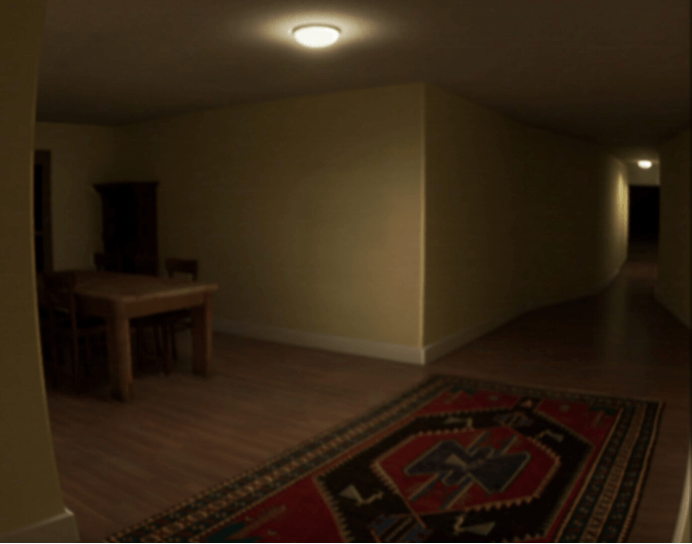
Later, I repeatedly listened to an audio full of current noise. Twenty-seven times, I heard it. A light “click” that almost didn’t exist, like the old-fashioned door lock was carefully pushed open. I dragged this audio to the position before the explosion. Therefore, the “click” was no longer a meaningless noise, but a trigger for the conspiracy. I give silence motivation and shadow guilt. I am like a creator, editing cause and effect with the mouse.
What really stopped me was a two-second shot. It looks like it was taken before the camera accidentally fell. The picture flipped quickly and finally fixed on a small stain on the ceiling. When I edited it a few times before, I always deleted it casually — it doesn’t matter. But that night, I left it and put it in the middle of the timeline. When playing, all the tense narratives suddenly lose weight at this moment. The meaningless and dirty ceiling rudely interrupted all the plays I had carefully arranged. It refuses to be a part of the story. It just existed, that’s all.
I turned off the software. Dozens of video file icons are silent on the desktop. They have never changed. What has changed is the self that I try to extract meaning from them. _The Complex_ didn’t give me a mystery. It was like a mirror, letting me see how hungry I was to find patterns in a chaos, and even pinched the chaos into the shape of a pattern with my own hands.
Later, whenever someone told me about the past with clear words and clear logic, I always thought of those snowflake noises, the shadows under the door, and the irrelevant ceiling. We may all be the editors of our own memories. In the long looking back, we subconsciously cut out the failures, collage the highlights, and tailor a film that is enough to convince us at this moment.
And the real past may be like the first video tape: dim, shaking, only seven seconds, and then fall into an indecipherable and eternal blue.